
CNC machining
Manufacture of metal parts according to customer drawings
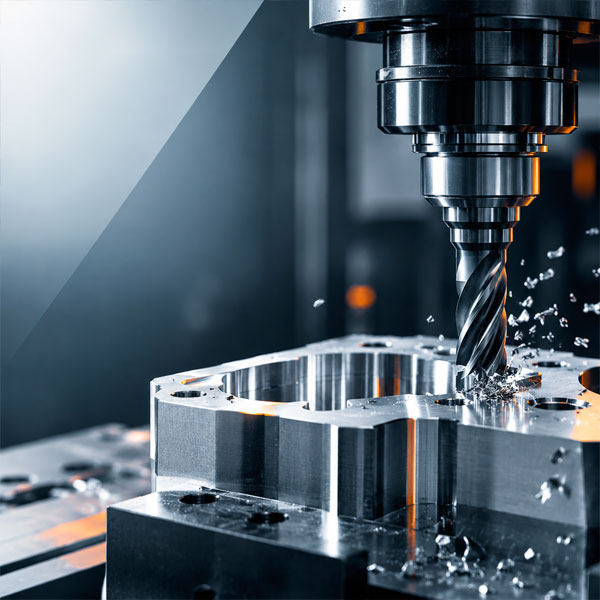
PRITZ DEVELOPMENT organizes CNC metal machining, including the machining of cast, die-forged and other metal
blanks, to obtain finished parts that conform to the customer’s technical documentation.
Depending on the product design and its required properties, the production process may include CNC turning
and milling, drilling, boring, threading and machining of seating surfaces.
CNC machining services primarily involve manufacturing parts according to customer drawings
and agreed technical requirements.
Main types
of machining
We plan CNC machining taking into account the blank material, part geometry, required accuracy and
surface quality. When preparing the process, we also consider workpiece clamping and tool access to the
surfaces to be machined.
Depending on the project, the scope of work may include CNC machining of steel, including stainless steel,
and CNC machining of aluminium. Manufacturing feasibility is assessed for the specific material grade,
geometry and technical requirements.
Machining of external and internal cylindrical surfaces, end faces, shoulders and other rotationally symmetrical features. It is used to manufacture shafts of various sizes, bushings, axles, flanges and other parts for machinery construction.
Machining of flat surfaces, slots, shoulders and contoured surfaces. It is used to manufacture housings, mounting plates, connecting components and parts with complex geometry. The scope of operations may also include edge chamfering according to the technical documentation.
Producing and machining holes, including holes with specified dimensions and requirements for their relative positions. If necessary, holes are machined for fasteners and mating parts.
Producing external and internal threads according to the drawing and joint requirements. Machining may include threaded holes, studs, bolts and other connecting components.
Precision machining of surfaces intended for seating bearings, shafts, bushings and other mating components. The process is selected based on dimensional, shape and surface quality requirements.
Where justified by accuracy and surface roughness requirements, the process may also include grinding. The feasibility and scope of this operation are agreed during project analysis.
CNC machining of parts with multiple functional surfaces, holes, slots, shoulders and other structural features. Manufacturing feasibility and the sequence of operations are determined after analyzing the technical documentation.
Machining of metal housings, support components, flanges, brackets, connecting parts and other industrial equipment components.
We consider projects based on drawings, specifications and agreed samples. CNC machining begins after the material, machining requirements, batch size and acceptance criteria have been established. For production based on a sample, we also agree on the documentation required to manufacture and inspect the part.
Comprehensive part manufacturing
From a metal blank to a finished product
For some projects, it is appropriate to organize not only machining but also blank manufacture, the necessary intermediate operations and preparation of finished parts for delivery.
PRITZ DEVELOPMENT considers the possibility of organizing the complete production process, taking into account customer requirements and agreed manufacturing cooperation arrangements. This approach brings the main manufacturing stages together within a single project and reduces the number of separate production-related contacts the customer needs to manage.
Depending on the task, the production process may include:
1. Analysis of drawings and technical requirements.
Clarification of geometry, material, tolerances, surface roughness and requirements for the finished part.
2. Selection of the blank manufacturing process.
Determining an appropriate method of obtaining the starting blank, taking into account the part design and
operating conditions.
3. Blank manufacture.
Organizing the manufacture of a cast blank, a hot die-forged blank or another agreed metal blank.
4. Heat treatment.
Including the necessary operations if specified in the technical documentation or agreed manufacturing process.
5. Machining.
Rough machining and finish machining to achieve the required geometry and surface parameters.
6. Quality control.
Dimensional inspection of the parts and verification of product conformity with the agreed requirements.
If the order requires a measurement report, the scope of measurements and documentation format are
established before production begins.
7. Preparation for shipment.
Kitting, packaging and preparation of products for transport according to the agreed terms.
8. Delivery organization.
Coordinating the handover of finished products to the
customer.
Industries we manufacture parts for
Machining is used to manufacture components, spare parts and functional elements for various types of industrial equipment.
We focus on projects for the following industries:
- General-purpose and special-purpose machinery manufacturing — parts for assemblies, mechanisms and units.
- Industrial and process equipment — housing, connecting and functional components.
- Mining and processing industry — equipment parts and spare parts for production systems.
- Energy sector equipment — metal components according to the manufacturer’s technical documentation.
- Conveyor and transport systems — support, connecting, rotating and other mechanism components.
- Agricultural machinery manufacturing — components for machines, mechanisms and equipment.
- Construction and road machinery — metal parts and assembly components.
- Repair and maintenance of industrial equipment — manufacture of spare parts according to drawings or agreed samples.
In each case, the manufacturing process and feasibility are assessed taking into account the part design, material, accuracy requirements, order volume and delivery deadlines.
Working from customer technical documentation
For a preliminary project assessment, it is recommended to provide technical drawings of the parts, specifications and any available manufacturing requirements.
The following are taken into account when reviewing an order:
- the material and manufacturing method of the starting blank;
- part geometry and functional purpose;
- dimensional tolerances and requirements for the relative positions of surfaces;
- surface roughness and heat treatment requirements;
- the number of parts per batch and anticipated order frequency;
- quality control requirements and documentation of measurement results;
- packaging and delivery requirements.
Based on the analysis, the scope of work, feasibility of organizing production, input data for cost calculation and anticipated delivery terms are clarified.
Why PRITZ DEVELOPMENT
Series production repeatability
Stability of dimensions, geometry and product quality across successive batches.
Full production cycle
Core metalworking operations are carried out within a single production process.
Working from customer documentation
Production is organized based on agreed drawings and technical requirements.
Production of pre-series batches
Before launching regular production, the manufacturing process and product can be checked using a limited batch.
ISO 9001
A quality management system with a valid certificate.
Headquartered in Poland
PRITZ DEVELOPMENT is headquartered in Katowice and focuses on cooperation with B2B customers in Poland and
the EU.
Machining of parts
PRITZ DEVELOPMENT organizes CNC machining of cast, die-forged and other metal blanks to obtain finished parts that conform to the customer’s technical documentation.
Depending on the product design and its required properties, the production process may include turning, milling, drilling, boring, threading and machining of seating surfaces.
Send technical drawings and part requirements — we will analyze the project and prepare the input data for the cost calculation.